Group Therapy & Social Skills Groups for Kids in Brooklyn
Finding the right support for your child’s social and emotional growth is a major step. At Resilient Mind Psychotherapy in Bay Ridge, our group therapy programs provide a warm, structured environment where children can build confidence, navigate new friendships, and overcome challenges together.
Each group is led by licensed mental health professionals who guide children through activities focused on emotional regulation, communication, and resilience. Through creative exercises and interactive discussions, kids in our Brooklyn sessions discover they aren’t alone—making the process of growing together both empowering and healing.
Whether your child is navigating social anxiety, shyness, or low self-esteem, we offer the practical tools and community support they need to thrive socially and emotionally.
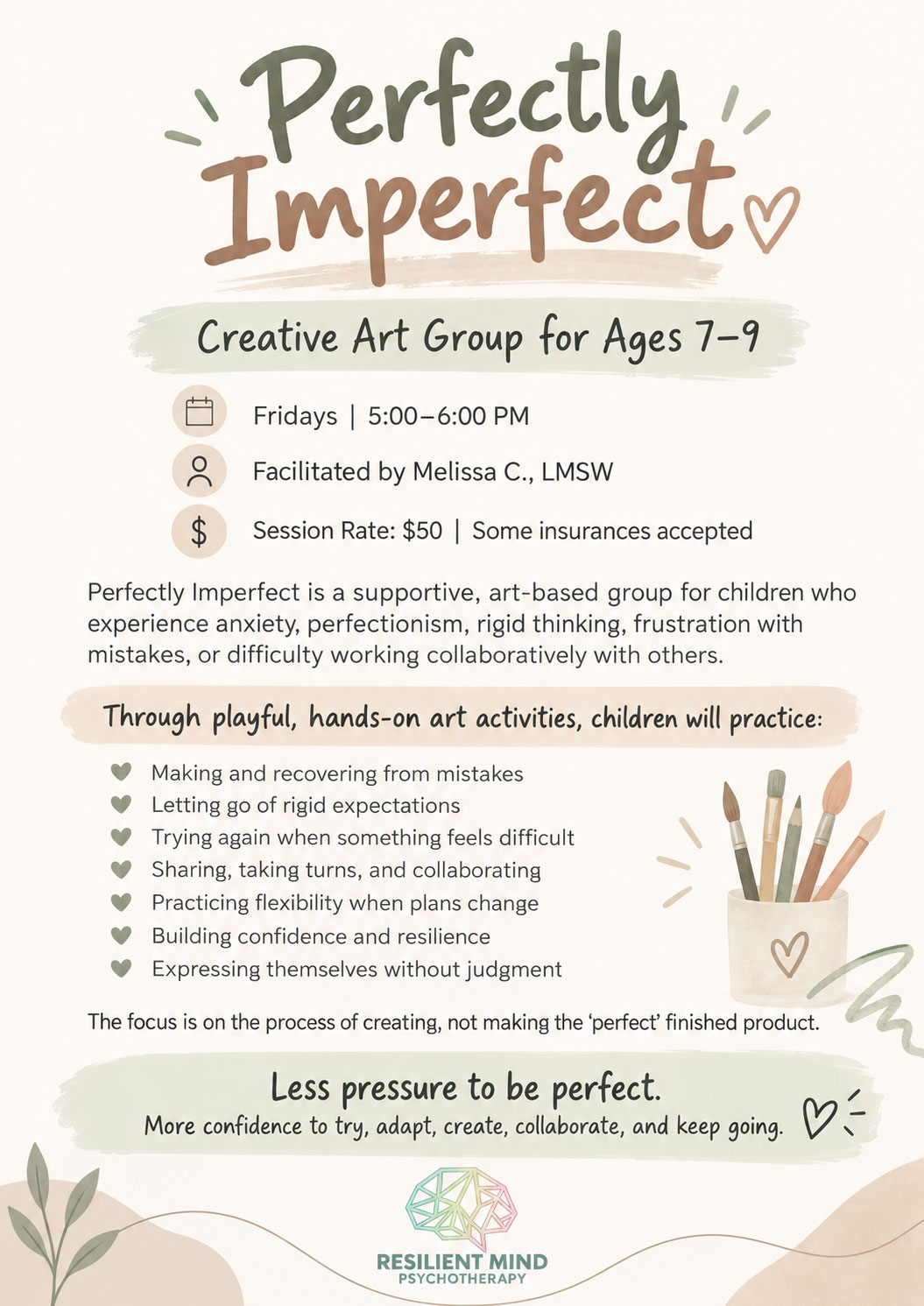
Perfectly Imperfect
Creative Art Group for Ages 7–9
Fridays | 5:00–6:00 PM
Session Rate: $50 | Some insurances accepted
Facilitated by Melissa C., LMSW
Perfectly Imperfect is a supportive, art-based group for children who experience anxiety, perfectionism, rigid thinking, frustration with mistakes, or difficulty working collaboratively with others.
Through playful, hands-on art activities, children will practice:
- Making and recovering from mistakes
- Letting go of rigid expectations
- Trying again when something feels difficult
- Sharing, taking turns, and collaborating
- Practicing flexibility when plans change
- Building confidence and resilience
- Expressing themselves without judgment
The focus is on the process of creating, not making the “perfect” finished product.
✨ Less pressure to be perfect. More confidence to try, adapt, create, collaborate, and keep going.
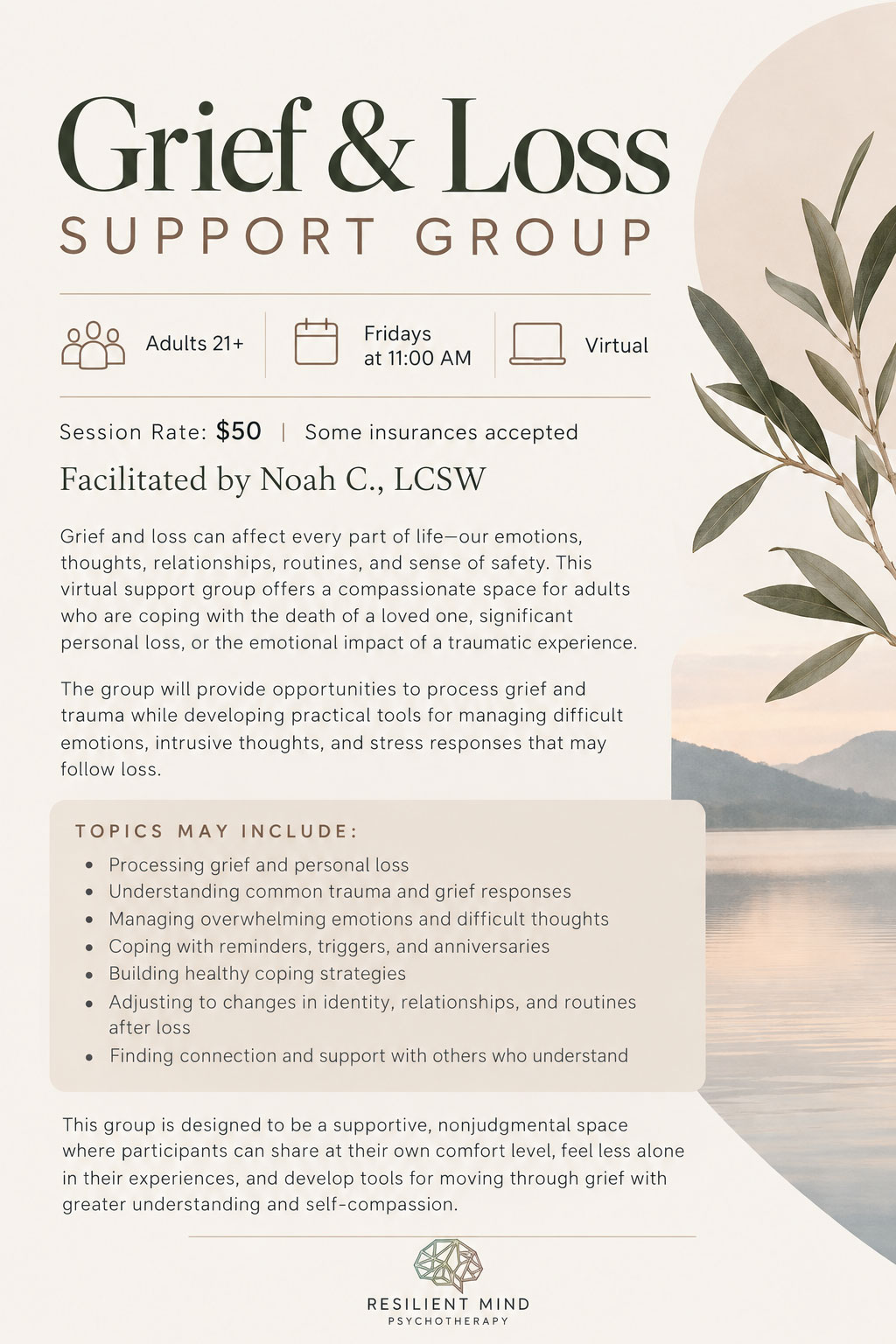
Grief & Loss Support Group
Adults Ages 21+ | Fridays at 11:00 AM | Virtual
Session Rate: $50 | Some insurances accepted
Facilitated by Noah C., LCSW
Grief and loss can affect every part of life—our emotions, thoughts, relationships, routines, and sense of safety. This virtual support group offers a compassionate space for adults who are coping with the death of a loved one, significant personal loss, or the emotional impact of a traumatic experience.
The group will provide opportunities to process grief and trauma while developing practical tools for managing difficult emotions, intrusive thoughts, and stress responses that may follow loss.
Topics may include:
- Processing grief and personal loss
- Understanding common trauma and grief responses
- Managing overwhelming emotions and difficult thoughts
- Coping with reminders, triggers, and anniversaries
- Building healthy coping strategies
- Adjusting to changes in identity, relationships, and routines after loss
- Finding connection and support with others who understand
This group is designed to be a supportive, nonjudgmental space where participants can share at their own comfort level, feel less alone in their experiences, and develop tools for moving through grief with greater understanding and self-compassion.
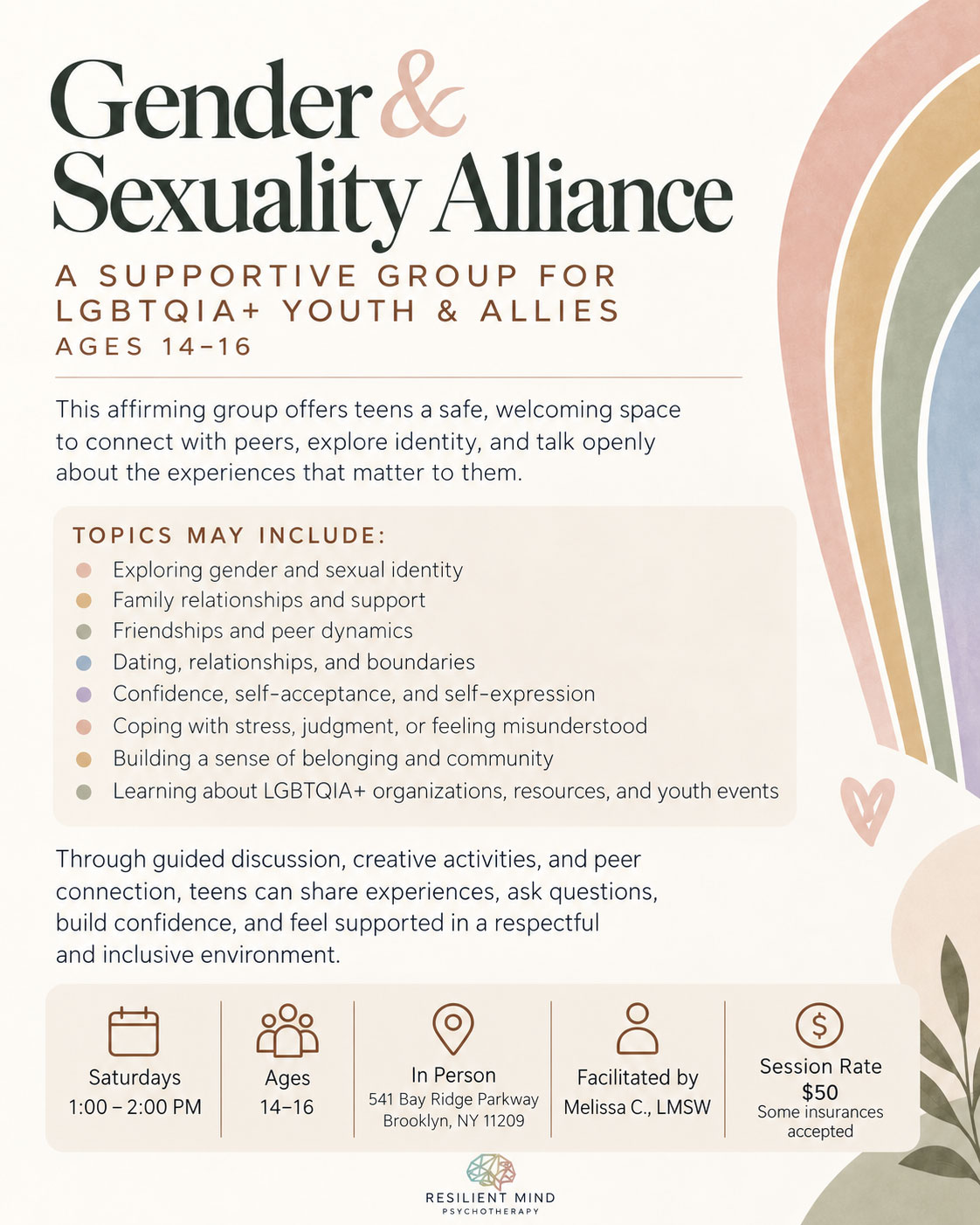
Gender & Sexuality Alliance
A supportive group for LGBTQIA+ youth & allies, ages 14–16
This affirming group offers teens a safe, welcoming space to connect with peers, explore identity, and talk openly about the experiences that matter to them.
Topics may include:
- Exploring gender and sexual identity
- Family relationships and support
- Friendships and peer dynamics
- Dating, relationships, and boundaries
- Confidence, self-acceptance, and self-expression
- Coping with stress, judgment, or feeling misunderstood
- Building a sense of belonging and community
- Learning about LGBTQIA+ organizations, resources, and youth events
Through guided discussion, creative activities, and peer connection, teens can share experiences, ask questions, build confidence, and feel supported in a respectful and inclusive environment.
Saturdays | 1:00 –2:00 PM
Ages 14–16
Facilitated by Melissa C, LMSW
Session Rate: $50 | Some insurances accepted
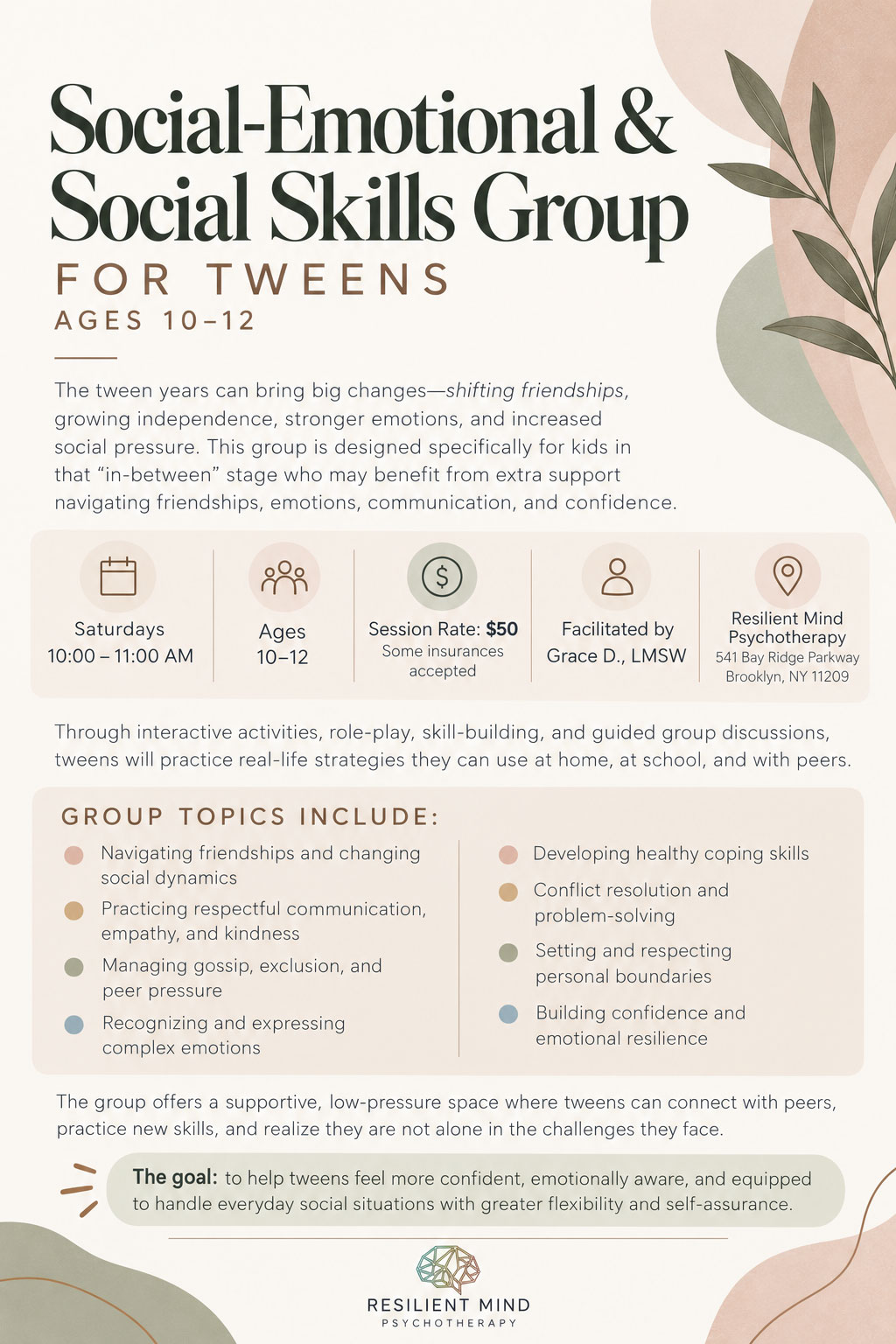
Social-Emotional & Social Skills Group for Tweens
Ages 10–12 | Saturdays at 10:30 AMSession Rate: $50 | Some insurances accepted
Facilitated by Grace D., LMSW
The tween years can bring big changes—shifting friendships, growing independence, stronger emotions, and increased social pressure. This group is designed specifically for kids in that “in-between” stage who may benefit from extra support navigating friendships, emotions, communication, and confidence.
Through interactive activities, role-play, skill-building, and guided group discussions, tweens will practice real-life strategies they can use at home, at school, and with peers.
Group topics include:
- Navigating friendships and changing social dynamics
- Practicing respectful communication, empathy, and kindness
- Managing gossip, exclusion, and peer pressure
- Recognizing and expressing complex emotions
- Developing healthy coping skills
- Conflict resolution and problem-solving
- Setting and respecting personal boundaries
- Building confidence and emotional resilience
The group offers a supportive, low-pressure space where tweens can connect with peers, practice new skills, and realize they are not alone in the challenges they face.
The goal: to help tweens feel more confident, emotionally aware, and equipped to handle everyday social situations with greater flexibility and self-assurance.
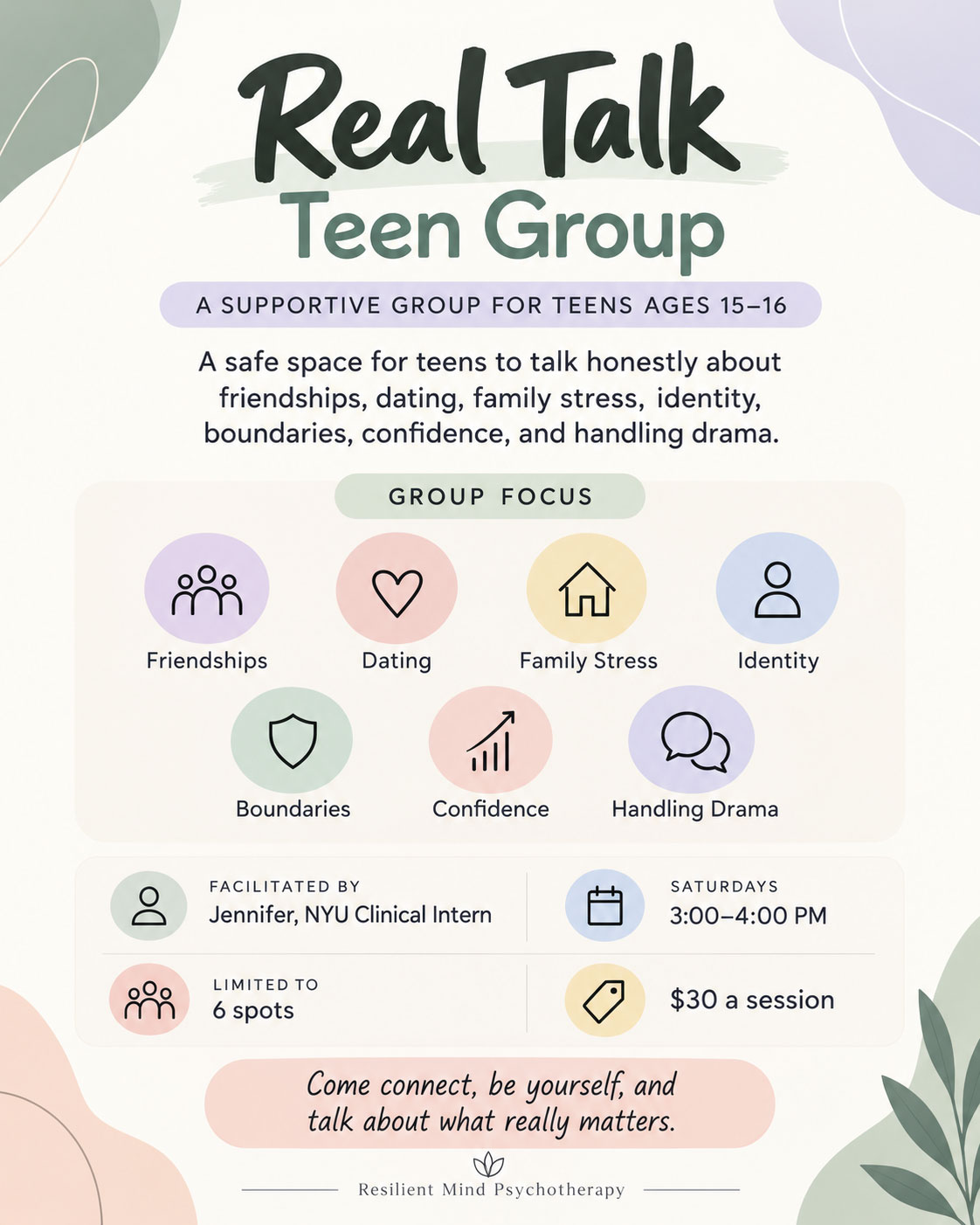
Real Talk: Teen Group
Being a teenager comes with a lot: shifting friendships, first relationships, pressure at home, and figuring out who you are. Real Talk is a small, supportive group where teens ages 15–16 can talk honestly about what’s on their minds, without judgment.
Each week, group members explore real-life topics including friendships, dating, family stress, identity, setting boundaries, building confidence, and handling drama. Teens learn practical skills, gain perspective from peers going through similar experiences, and leave each session feeling more understood and better equipped to navigate their world.
Group details:
- Ages: 15–16
- When: Saturdays, 3:00–4:00 PM
- Facilitator: Jennifer, NYU
- Clinical Intern
- Group size: Limited to 6 participants
- Fee: $30 per session
Space is limited. To reserve a spot or ask questions, call 929-200-3049.