Music Therapy for Children in Brooklyn, NY
Music therapy offers children a powerful, creative way to understand their emotions, regulate their bodies, and express themselves without pressure or judgment. At Resilient Mind Psychotherapy, our music therapy for children in Brooklyn is designed to support emotional awareness, self-regulation, and social connection through engaging, evidence-based musical experiences.
Children don’t always have the words to explain how they feel — especially when emotions feel overwhelming. Music therapy provides a developmentally appropriate way for kids to communicate, process big feelings, and build confidence using rhythm, melody, movement, and sound.
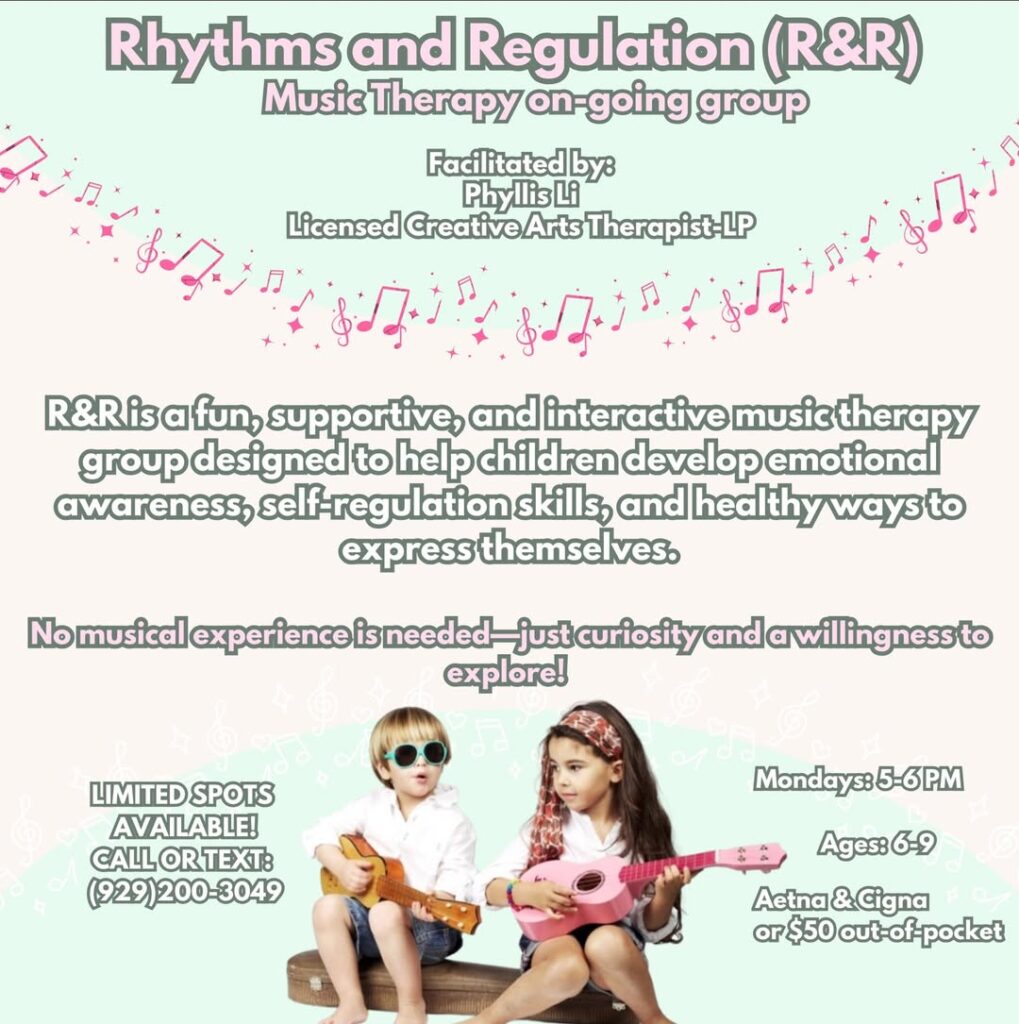
Our licensed creative arts therapists work with children individually and in small groups, using music to support emotional regulation, attention, communication, and healthy expression. One of our signature offerings is Rhythms and Regulation (R&R) — an ongoing music therapy group for children ages 6–9, designed to help kids develop calming strategies, emotional awareness, and positive social skills in a fun, supportive environment.
Rhythms & Regulation (R&R):
Music Therapy Group for Children Ages 6–9
Rhythms & Regulation (R&R) is an ongoing, small-group music therapy program designed to help children ages 6–9 develop emotional awareness, self-regulation skills, and healthy ways to express themselves through music.
Led by a Licensed Creative Arts Therapist (LP) and Board-Certified Music Therapist (MT-BC), this group provides a fun, supportive, and interactive environment where children learn to manage big emotions, practice calming strategies, and build confidence — all through engaging, music-based experiences.
Each session includes a variety of structured and creative activities such as:
Instrument play and rhythmic exploration
Movement and body-based regulation activities
Songwriting and musical storytelling
Improvisation and collaborative music-making
Through these experiences, children practice identifying feelings, communicating their needs, and regulating their emotions in a developmentally appropriate way. Musical collaboration also supports important social skills, including listening, turn-taking, cooperation, and teamwork.
This group is especially helpful for children who:
Struggle with emotional regulation or impulsivity
Experience anxiety or difficulty calming their bodies
Have attention challenges or ADHD-related symptoms
Benefit from sensory-based and creative approaches
Learn best through movement, rhythm, and play
Program Details:
Ages: 6–9
Schedule: Mondays, 5:00–6:00 PM
Format: Ongoing small group
Self-pay: $50 per session
Location: Resilient Mind Psychotherapy, Brooklyn, NY
Availability: Limited spots available
Parents are encouraged to reach out early, as group size is intentionally kept small to ensure individualized support and a positive group experience.
📞 Call or text: (929) 200-3049 to inquire about enrollment.




How Music Therapy Supports Emotional Regulation and Development
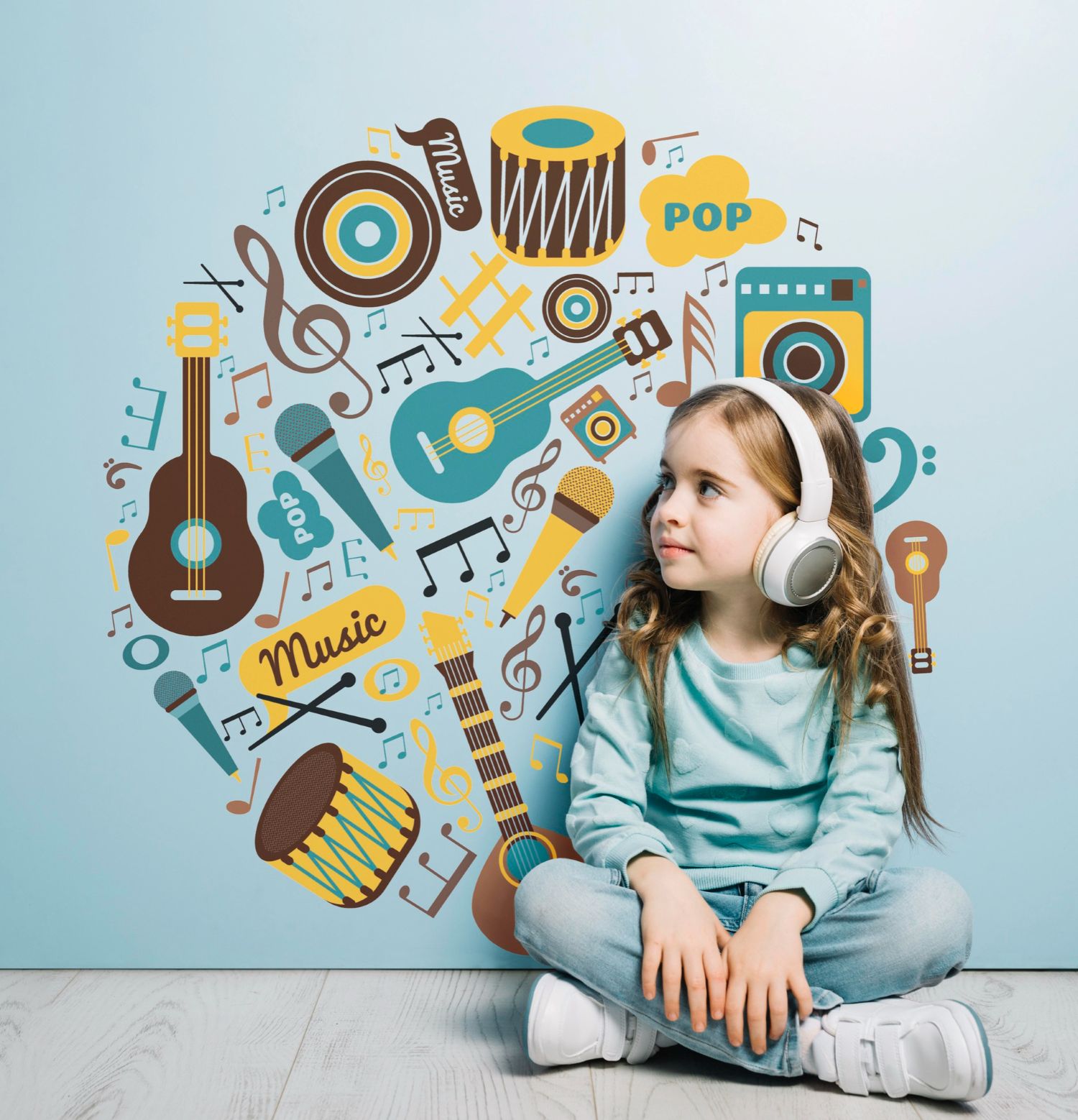
Music therapy is a research-supported, evidence-based approach that uses musical experiences to support emotional, behavioral, and social development in children. Because music engages multiple areas of the brain at once — including emotion, movement, attention, and memory — it can be especially effective for children who struggle with regulation, focus, or communication.
At Resilient Mind Psychotherapy, music therapy is tailored to each child’s developmental needs and therapeutic goals. Sessions are designed to help children build practical skills they can use in everyday life, while feeling supported, understood, and engaged.
Music therapy can help children:
Develop emotional awareness
Music provides a safe and expressive outlet for children to explore feelings such as frustration, worry, excitement, or sadness — even when they don’t yet have the words to describe them.Improve self-regulation and calming skills
Rhythm, repetition, and movement help children learn how to regulate their nervous system, manage big emotions, and practice calming strategies they can use outside of sessions.Support attention and focus
Structured musical activities help children strengthen sustained attention, impulse control, and follow-through — skills that are often challenging for children with ADHD or attention-related concerns.Build confidence and self-expression
Creating music, making choices, and participating in group activities helps children feel capable and confident in expressing themselves without fear of making mistakes.Strengthen social and communication skills
In group settings, music therapy naturally encourages listening, turn-taking, cooperation, and teamwork — helping children practice healthy interaction with peers.Meet sensory needs in a supportive way
Music therapy incorporates movement, sound, and tactile experiences that support sensory processing and help children feel more grounded and organized in their bodies.
Music therapy is especially beneficial for children who experience anxiety, ADHD-related symptoms, emotional dysregulation, sensory sensitivities, or difficulty connecting with peers. By combining creativity with clinical expertise, music therapy supports both emotional growth and resilience.
Who Can Benefit from Music Therapy?
Music therapy can support a wide range of children by meeting them where they are developmentally, emotionally, and neurologically. Because music engages the body, mind, and emotions at the same time, it is especially effective for children who struggle with traditional talk-based approaches.
At Resilient Mind Psychotherapy, music therapy is thoughtfully designed for children who benefit from creative, sensory-based, and relational forms of support.
Music therapy may be helpful for children who:
Have difficulty regulating emotions
Children who experience frequent meltdowns, frustration, or emotional overwhelm can learn calming strategies through rhythm, movement, and musical structure.Struggle with attention, impulsivity, or hyperactivity
Music therapy supports focus, impulse control, and follow-through, making it especially beneficial for children with ADHD or attention-related challenges.Experience anxiety or worry
Music offers a gentle, nonverbal way to explore emotions, reduce stress, and build coping skills without pressure to “talk it out.”Have sensory sensitivities or sensory-seeking behaviors
Musical activities help children organize sensory input and feel more grounded in their bodies.Find it hard to express feelings verbally
Through songwriting, instrument play, and creative exploration, children can communicate emotions safely and authentically.Struggle with peer relationships or social skills
Group-based music therapy supports cooperation, turn-taking, listening, and communication in a structured, supportive environment.Benefit from creative or play-based approaches
Music therapy complements play therapy and group therapy by using creativity as a bridge to emotional growth.
Music therapy can be offered individually or in small groups, depending on a child’s needs and goals. Programs such as Rhythms & Regulation (R&R) provide children with consistent opportunities to practice emotional regulation, communication, and social connection through engaging musical experiences.
Parents often notice improvements not only during sessions, but also at home and school — including increased confidence, better emotional awareness, and stronger coping skills. If you’re unsure whether your child’s challenges are related to attention, impulsivity, or emotional regulation, our ADHD in Children Test can help provide clarity and guide next steps for therapy and support.

❓ Frequently Asked Questions
1. Does my child need to be musical to benefit from music therapy?
Not at all. Music therapy is not about musical talent or performance. Children do not need prior music experience to participate or benefit. Sessions focus on emotional expression, regulation, and connection — using music as a tool rather than a skill to master.
2. How is music therapy different from music lessons or classes?
Music therapy is a clinical service led by a licensed mental health professional. Unlike music lessons, which focus on learning instruments or technique, music therapy uses sound, rhythm, and movement to support emotional development, coping skills, and social growth.
3. Can music therapy help children who struggle with attention or hyperactivity?
Yes. Music therapy is especially helpful for children who have difficulty focusing, sitting still, or managing impulses. Rhythm and movement naturally support attention, while structured musical activities help children practice regulation in a way that feels engaging rather than restrictive.
4. What happens during a typical music therapy group session?
Sessions may include instrument play, movement, rhythm games, creative expression, and collaborative music-making. Activities are intentionally designed to support emotional awareness, calming strategies, communication, and social interaction — all within a supportive and playful environment.
5. How do I know if group music therapy is right for my child?
Group music therapy may be a good fit if your child benefits from structure, enjoys creative activities, or needs support with emotional regulation or peer interaction. A brief consultation can help determine whether a group setting or individual support is the best option for your child’s needs.